
Why Salts vary in intensity and influence our perception of salty tastes
This question was asked upon me at a friendly brunch which prompted me to do some research.
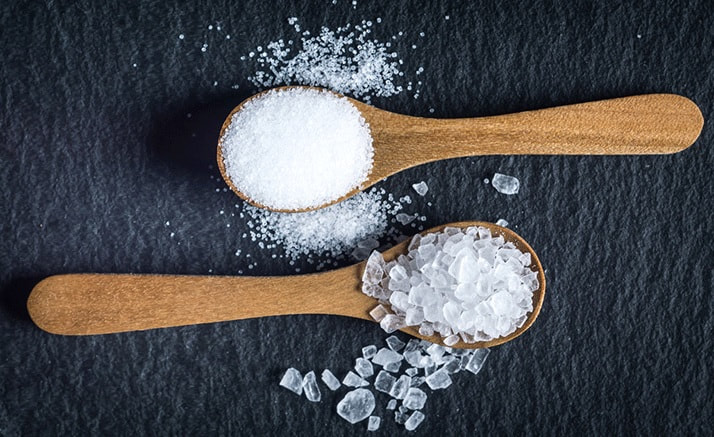
There are many different types of salts available, most commonly differentiated by sea salt and table salt.
Table salt is harvested underground from salt deposits as rock salt (in Australia to be found in WA and SA) and is commercially refined and ground. This removes any unwanted impurities and in the process, it also removes any traces of minerals. At this stage, it is pure sodium chloride. It then has an anti-caking agent added to avoid clumping and in many countries, iodine is added to prevent iodine deficiency.
Sea Salt is harvested through evaporation of seawater or saltwater lakes and results in larger coarser flakes. Because it is not highly processed, it retains natural minerals such as potassium, zinc, calcium, magnesium and iron. These minerals can influence our perception of salty taste and depending on the location of harvest, can vary greatly. When used as a food topping, the larger flakes of salt create a ‘pop’ of salt flavour at first taste intensifying our mouth feel. Varying thickness and textures of flakes will have different abilities to melt on the tongue and thus change the influence of taste throughout the process of ingestion, throughout chewing and after swallowing. This effect on salty taste can help us limit salt intake.
In summary, sea salt is a good salt for a topping and is a healthy and tastier option with the added minerals. Table salt with it’s added iodine is a good salt for cooking. To achieve the same amount of sodium chloride between table salt and sea salt, you will need to measure the same weight and not volume.
I suggest to use both sea salt and table salt and use to taste in moderation. Table Salt for cooking and Sea Salt for garnish/topping.
This question was asked upon me at a friendly brunch which prompted me to do some research.
There are many different types of salts available, most commonly differentiated by sea salt and table salt.
Table salt is harvested underground from salt deposits as rock salt (in Australia to be found in WA and SA) and is commercially refined and ground. This removes any unwanted impurities and in the process, it also removes any traces of minerals. At this stage, it is pure sodium chloride. It then has an anti-caking agent added to avoid clumping and in many countries, iodine is added to prevent iodine deficiency.
Sea Salt is harvested through evaporation of seawater or saltwater lakes and results in larger coarser flakes. Because it is not highly processed, it retains natural minerals such as potassium, zinc, calcium, magnesium and iron. These minerals can influence our perception of salty taste and depending on the location of harvest, can vary greatly. When used as a food topping, the larger flakes of salt create a ‘pop’ of salt flavour at first taste intensifying our mouth feel. Varying thickness and textures of flakes will have different abilities to melt on the tongue and thus change the influence of taste throughout the process of ingestion, throughout chewing and after swallowing. This effect on salty taste can help us limit salt intake.
In summary, sea salt is a good salt for a topping and is a healthy and tastier option with the added minerals. Table salt with it’s added iodine is a good salt for cooking. To achieve the same amount of sodium chloride between table salt and sea salt, you will need to measure the same weight and not volume.
I suggest to use both sea salt and table salt and use to taste in moderation. Table Salt for cooking and Sea Salt for garnish/topping.